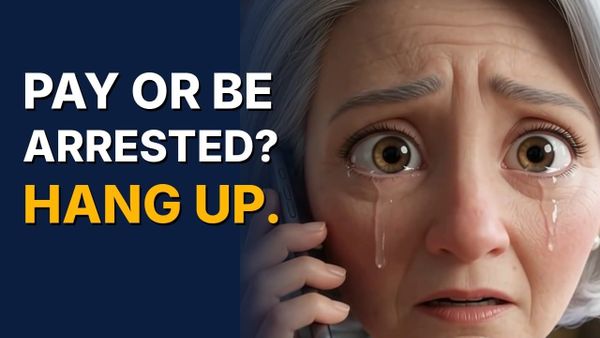
The "Bail Money" Call: When the Grandparent Scam Sends Someone to Your Door
A voice says your son or grandchild is in jail and needs cash for bail. Then someone comes to your door to pick it up. Here is how the trap works, what one 76-year-old woman did instead, and what to do if this call comes to you.
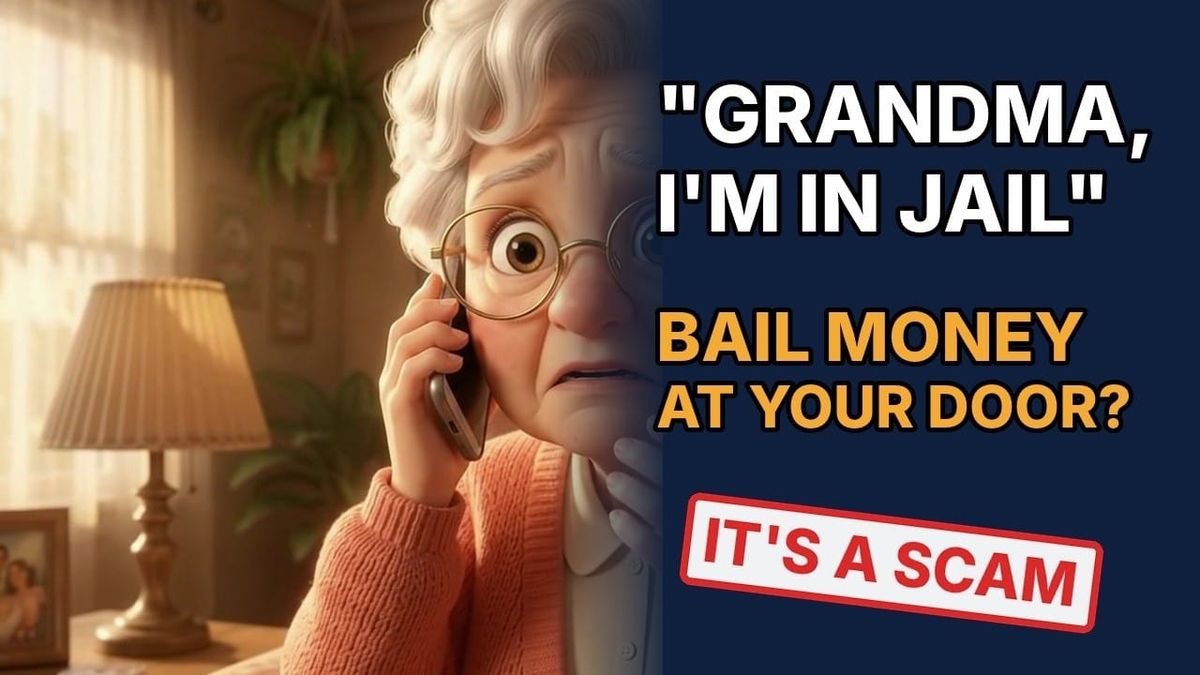
A call about her son
A 76-year-old woman in Florida answered her phone. The voice on the line said it was her son. He said he had been in a crash where someone died. He said he was in jail and needed $9,800 to get out.
Then more calls came. One caller said he was an attorney. Another said he was from a program connected to the court. They told her to take cash out of the bank, pack it in an envelope, and wait. Someone would come to her home to pick it up.
She did not pay. She called the police. The scammers did not know that, so they sent someone to her door anyway.
How the trap works
1. Panic. The voice sounds like your grandchild or your child. You may hear crying. Then someone else takes the phone and says he is a police officer, a lawyer, or a court official. Criminals can now copy a loved one's voice with artificial intelligence, so a familiar voice proves nothing.
2. Secrecy. The voice begs you not to tell anyone else in the family. The so-called lawyer says the case is secret and tells you not to tell your bank why you need the money. These are the scammers' orders. Do not obey them.
3. The pickup. They want cash, packed in an envelope or a box. Then someone comes to your door. He may call himself a bail bondsman. Or he may be an innocent driver, such as a rideshare or delivery driver, who has no idea what he is carrying. Do not hand anything over. Call the police.
The numbers
- The Federal Trade Commission reported in October 2026 that people 60 and older are more likely than younger adults to report losing money when a scammer pretends to be a friend or family member.
- In a separate case in October 2026, a federal judge sentenced a man to 33 months in prison for his part in a grandparent scam. He recruited fake "bail bondsmen" to collect cash from about 20 older Americans.
Three facts to keep by your phone
- No court, jail or lawyer sends anyone to your home to collect bail.
- A real emergency can wait five minutes while you check.
- Anyone who tells you to keep it secret is not on your side.
What to do
If you get this call: Stay calm. Hang up. Call your loved one on the number you already have. If you cannot reach them, call another family member or your local police. Never call a number the caller gives you.
Pick a family code word today. Share it with your family, and never post it online. When a caller says they are family and in trouble, ask for the code word. Do not say it first. If they cannot say it, hang up.
If someone is coming to your door for money: Call the police and let them handle it. Do not open the door yourself. If you are in danger right now, call 911.
If you already paid:
- Do not send one more dollar. Scammers who get paid once often come back for more.
- Call your local police right away.
- Call your bank, using the number on your card or statement.
- Report it to the FBI at ic3.gov and to the National Elder Fraud Hotline. For free support, call the AARP Fraud Watch Network Helpline (numbers below).
- Anyone who calls offering to get your money back for a fee is another scammer.
It is not your fault. These criminals do this for a living.
What happened to her
She had not paid the scammers a single dollar. She had called the police, and officers were already at her home when a rideshare driver arrived to pick up an envelope. Published reports do not say who handed it to him or what was inside it. The driver had no idea he was part of a crime.
Investigators followed that envelope all the way to Orlando. There, police say, a different man, not the driver, ended up with it. That man was arrested and charged with a felony. He has not been convicted.
If it is your parent or grandparent
Set up a family code word with them this week. Tell them: if anyone calls about bail money, hang up and call you on the number they already have. Then share this article or the video with someone you love who could get this call.
Where to get help
First, hang up and send nothing. Never call a number the caller gave you. Look up every number yourself. The numbers below are official and safe to call.
- National Elder Fraud Hotline: 1-833-372-8311 (1-833-FRAUD-11), Monday–Friday, 10am–6pm ET, for adults 60 and older
- AARP Fraud Watch Network Helpline: 877-908-3360, Monday–Friday, 8am–8pm ET, free for everyone
- FBI Internet Crime Complaint Center: ic3.gov
- Your local police: use the non-emergency number to report. If you are in danger right now, call 911.
- Your state attorney general: look up the consumer protection office on the official website.
The rule
No real emergency is paid in cash at your front door. If a caller says he will send someone to pick up money, hang up and call your loved one yourself.
Sources: Federal Trade Commission, Protecting Older Consumers 2025–2026 (October 2026); FBI Internet Crime Complaint Center; U.S. Department of Justice, District of Vermont (October 2026); published accounts of the Florida case and police statements (October 2026). The man arrested in the Florida case has been charged, not convicted.
Educational, not legal or financial advice.