"The Only Safe Place for Your Savings": The Five Payment Methods Behind America’s Largest Senior Fraud Losses
Forget who is calling. The tell is how they want to be paid — and there are only five methods. Here is why every one of them is impossible to reverse, and the one rule that settles it before you have to judge anybody.
In its first five months running bitcoin machines in one American city, a kiosk operator's own data told a story that should have stopped the business where it stood. Ninety-three percent of every dollar deposited into those machines came from a scam. Nearly half the money moving through them had already been flagged as fraudulent by the operator's own systems. The median person feeding cash into a kiosk was seventy-one years old, and the median deposit was eight thousand dollars. One customer made nineteen separate transactions over the course of a few days and lost ninety-eight thousand.
Those are not figures assembled from victim complaints after the fact. They come from a consumer protection action brought by a government attorney general's office in September 2025, which further alleges the operator charged undisclosed fees of up to twenty-six percent per transaction — against an industry norm closer to one percent — and enforced a flat no-refunds policy against the very people its own systems had already marked as defrauded. Those allegations have not been decided.
Hold on to one detail, because everything else follows from it. Nobody hacked those people. No password was stolen, no account was broken into. Every one of them stood in front of a machine and put their own money in, one bill at a time, because somebody on the telephone told them to.
The question that costs nothing to ask
Most fraud advice asks you to become a better judge of people. Listen for pressure. Notice if the story changes. Ask yourself whether a real agency would really call.
That advice fails for a simple reason: the person on the other end has run this conversation several thousand times, and you are running it for the first time. You are not going to out-argue them. You will not catch the tell in their voice, because there isn't one.
There is a different question, and it does not require you to judge anybody at all.
How do they want to be paid?
The caller's identity is a claim. The payment method is a fact. And it is a fact you can check against a single sentence the Commodity Futures Trading Commission published in a customer advisory: no government agency, legitimate financial institution, or reputable company will instruct you to move money using crypto ATMs, gift cards, or couriers.
Read what that sentence does and does not say. It does not tell you to be careful. It does not tell you to ask more questions. It says none of them do this — not sometimes, not under special circumstances, not for your protection. Which means the request itself is the evidence, and it arrives before you have had to evaluate a single word about who is calling.
Five methods, in the order the money gets bigger
Gift cards. A bill, a fine, a fee. Drive to a pharmacy, buy Apple or Google Play cards, read the numbers off the back over the phone. The Federal Trade Commission's guidance is about as blunt as a federal agency gets: no real business or government agency will ever tell you to buy a gift card to pay them. Not the IRS, not Medicare, not the electric company, not a police department collecting a fine. A gift card buys things at one store. That is the entire function. The moment those numbers are read aloud, the money is gone.
Payment apps. Zelle, Venmo, Cash App. They sit inside your banking app, which is exactly why they feel like banking. They are not. A credit card lets you dispute a charge and puts the burden of proof on somebody else. A payment app moves money the way handing over cash moves money.
And here is the part that catches people who consider themselves careful: federal law draws a hard line between money stolen from your account and money you were tricked into sending. The first is an unauthorized transfer, and you have reimbursement rights. The second is an authorized transfer, and you have none. If a bank makes you whole after you were talked into sending it, that is a courtesy. It is not a rule, and it is not a right.
Crypto machines. The convenience store, the gas station. Your account has been compromised, the caller says; the only safe place for your savings is a digital wallet. They stay on the line while you drive. They tell you which buttons to press. They ask you to feed in cash a few thousand dollars at a time — which is exactly the pattern that filing describes, nineteen transactions across several days.
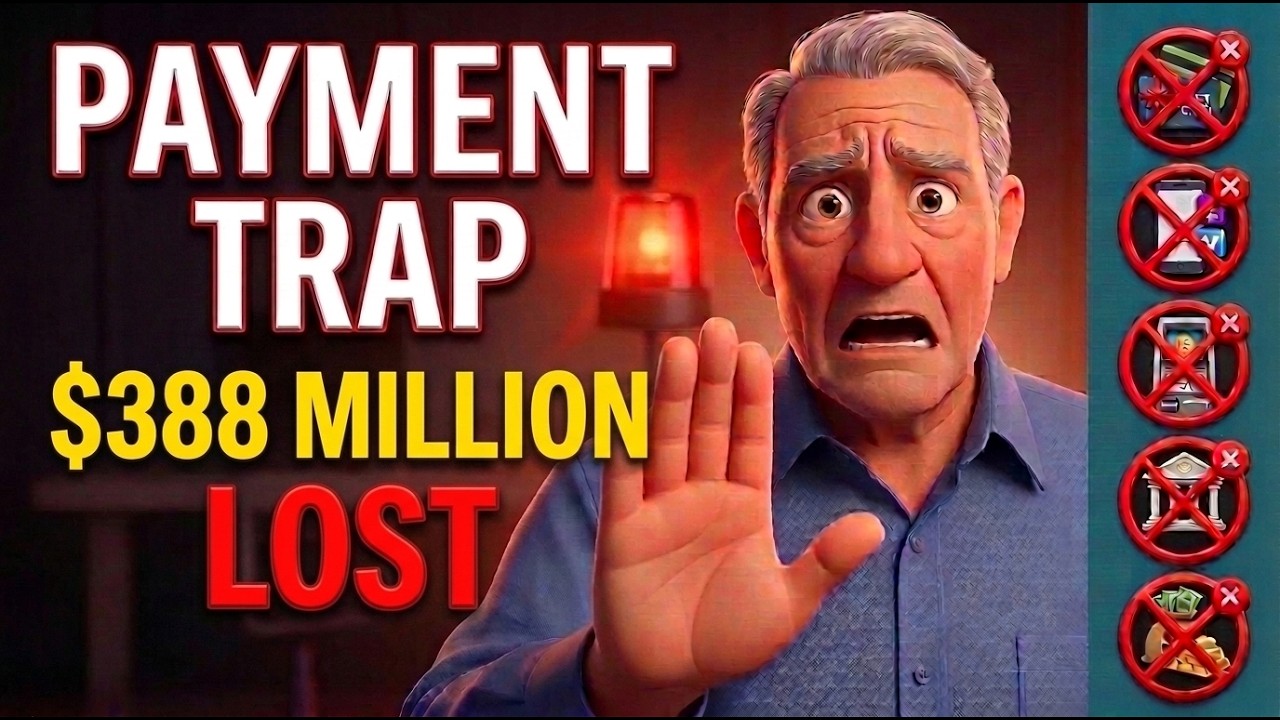
Americans reported $388 million lost through those machines last year, according to the CFTC citing FBI complaint data — a 58 percent jump in a single year. And when the FTC examined older adults who lost ten thousand dollars or more in 2024, cryptocurrency was the single most common way the money left. A third of those reports. Most named a bitcoin machine specifically.
Wire transfers. Straight out of the bank account, and where the largest losses live. Among people sixty and over who lost more than one hundred thousand dollars in 2024, a bank transfer was the most common method of all. Wires are fast and wires are final. That is not a defect — it is the product. It is also precisely why a criminal wants one.
A courier at your door. The newest, and the one people refuse to believe until it is happening to them. Somebody comes to the house and collects cash. Sometimes gold. The story is that your money is not safe where it is, and that a courier from the government or from your bank will move it somewhere secure. In roughly one in six of the large losses among older adults, the payment was cash. Among the very largest, gold appeared in about one in five.
There is no such thing. No agency sends a person to your door to collect money for safekeeping. Not one, not ever.
What the five have in common is not an accident
Every method on that list is difficult or impossible to reverse.
That is not a coincidence and it is not a coincidence's cousin. It is the selection criteria. A criminal picks the method precisely because you cannot undo it — which means the payment method is telling you what they intend before they have told you one true thing about themselves.
Five signs, and none of them require you to judge the caller
- They chose the method. Legitimate organizations take payment in ordinary ways and let you pick among them. If the method arrived with the request, that is the answer.
- The method cannot be reversed. Gift card numbers, crypto, a wire, cash in a stranger's hand. Ask yourself what happens if you change your mind in an hour. If the answer is nothing can be done, that is the point.
- They stay on the phone while you do it. Real institutions do not chaperone a payment. Continuous contact exists to keep you from talking to anyone else.
- The money is going somewhere "safe." No account is made safer by being emptied. Safekeeping is the story that moves the largest sums.
- You were told not to discuss it. Any instruction to keep a financial matter from your bank teller, your family, or the police is not a security measure. It is the removal of the one thing that reliably stops this.
The house rule, short enough to keep by the telephone
Nobody legitimate tells you how to pay.
If the caller is choosing the method for you, you already have your answer — and you never had to work out who they were.
If this is happening right now
Act tonight, not in the morning. Recovery is a race, and the window is measured in hours.
- Call your bank's fraud department — the number on the back of your card, not a number anyone gave you.
- If it was a gift card, call the card company, ask them to freeze it, and keep the card and the receipt.
- Report it at ReportFraud.ftc.gov, and file with the FBI at ic3.gov. The FBI operates a team whose entire job is freezing stolen money before it moves again, and its guidance is blunt: it only works if the report is immediate.
- National Elder Fraud Hotline — 1-833-372-8311, Monday to Friday, 10am to 6pm ET.
- AARP Fraud Watch Network Helpline — 877-908-3360.
And if you are reading this on behalf of a parent rather than yourself: the single most protective sentence you can put in their house is not a warning about scammers. It is a standing agreement that no money leaves by any method until they have called you first. Shame is what keeps this quiet, and quiet is what makes it expensive.
Sources: Consumer protection action against a crypto ATM operator brought by a government attorney general's office, September 2025. Commodity Futures Trading Commission, customer advisory on crypto ATM fraud, citing FBI complaint data. Federal Trade Commission, consumer guidance on gift card payment scams. Federal Trade Commission, Protecting Older Consumers 2024–2025, report to Congress. Electronic Fund Transfer Act and Regulation E, on the distinction between unauthorized and authorized transfers. FBI Internet Crime Complaint Center, Recovery Asset Team guidance. Allegations in pending litigation are allegations and have not been proven.