"Not One Person on That Call Was Real": The Deepfake Scam That Took $25 Million — And Is Now Aimed at Seniors
It takes three seconds of your grandson's voice. On one video call, it took $25 million — and every face on that call was generated. Here is how AI voice cloning and deepfakes are being aimed at older Americans, the five warning signs, and the one test that still beats all of it.
It takes three seconds.
That is how much of your grandson's voice a criminal needs — three seconds of audio, pulled from a voicemail, a birthday video, a church service posted online — to build a copy of him that will say anything they type. Not an impression. A copy.
Here is what that technology did on one video call.
An employee at the Hong Kong office of a multinational engineering firm joined a call with his company's chief financial officer. Other colleagues were on the screen too. He recognized their faces. He recognized their voices. They discussed a confidential transaction and asked him to move money, and he did what any of us would have done with our own CFO looking back at us: he moved it. Twenty-five million dollars.
Not one person on that call was real. Every face was generated. Every voice was cloned. He was the only human being in that meeting.
He was a finance professional. At a global firm. On a video call. Looking right at people he knew. And it still worked.
Why this matters to your family
It is tempting to file that story under corporate crime and move on. Don't. The lesson runs the other way.
That man had every advantage you don't. He had colleagues on the call. He had a finance department. He had approval controls and a reason to be suspicious of a large transfer. The technology defeated all of it in a single meeting.
Your mother, sitting alone at nine at night, has none of that. She has a phone, a voice she has known for thirty years, and about four seconds to decide.
The scale
Last year, scams powered by artificial intelligence cost Americans $893 million across more than 22,000 complaints. Of those losses, $352 million came from victims over 60.
The FBI issued a public warning about voice cloning in June 2026.
And across every kind of fraud, Americans over 60 lost $7.75 billion last year — a record, and up 59% in a single year, across 201,266 complaints. The average reported loss was $38,500. More than 12,400 people lost over $100,000 each.
Fifty-nine percent. In one year. Nothing else in this field moves like that.
How the trap is built
There are two technologies, and they are simpler than you think.
Voice cloning. A computer listens to a recording of someone's voice and learns to speak in it. Three seconds is enough. The source doesn't have to be anything private — a public Facebook video of a grandchild's graduation will do.
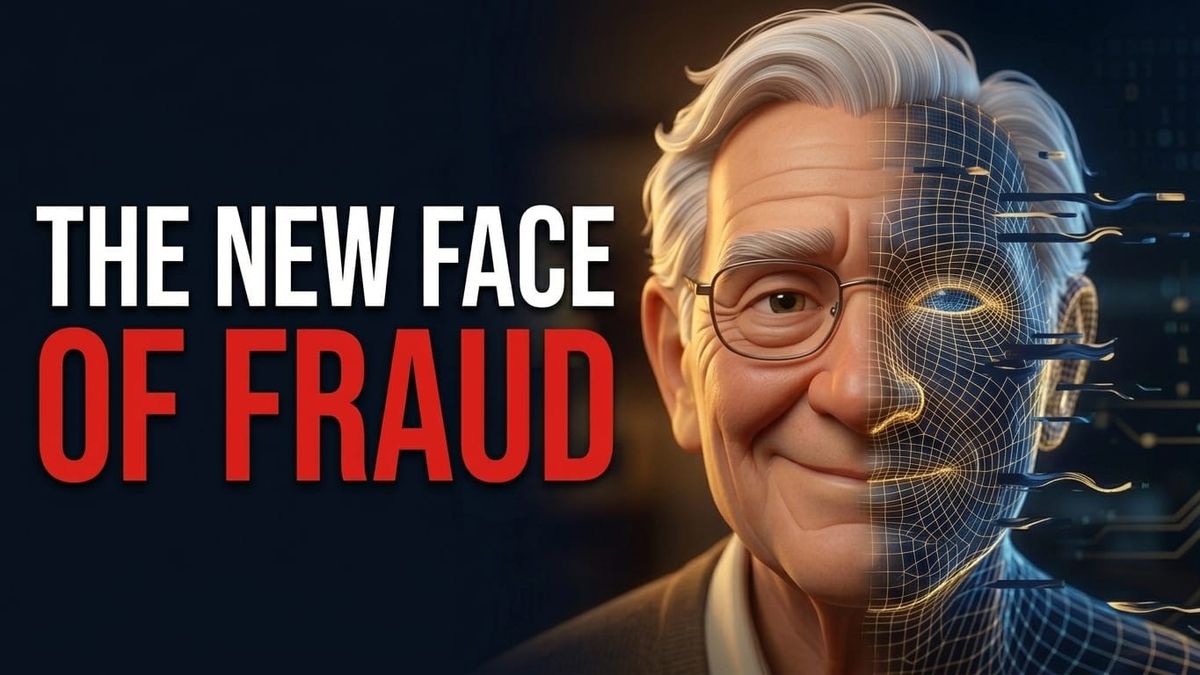
The deepfake. The same idea, applied to a face. A computer can place someone's face onto a live video call and make it speak. That is what happened on the $25 million call. Both of these used to require a studio and a specialist. Today they require a laptop and a few minutes.
Criminals are aiming them at older Americans in three ways.
The emergency. Your grandson's voice, crying, telling you he has been in an accident or arrested, that he needs money tonight, and please don't tell his mother. The voice is perfect — because it is his voice.
The trusted institution. A call, or now a video call, from your bank's fraud department, a government office, or your own financial advisor. The face is right. The voice is right. And they need you to move your money somewhere safe.
The famous face. A video of someone you recognize — a well-known investor, a television personality — recommending an opportunity. They never said it. They never recorded it. The whole thing was manufactured.
Notice what all three have in common. They are not trying to win an argument with you. They are borrowing someone you already trust, and letting your own trust do the work. That is why being careful is not enough, and why being fooled is not a character flaw.
The five warning signs
1. It came to you, and it came with urgency. A familiar voice, out of nowhere, and something must happen right now. Real emergencies survive a phone call to someone else. Manufactured ones don't.
2. Secrecy. "Don't tell your daughter. Don't tell anyone." Hear this clearly: a real family member in real trouble wants more people helping, not fewer. Secrecy is not embarrassment. It is engineering.
3. They will not let you hang up and call back. That is the tell. A cloned voice cannot answer your grandson's real telephone. Every excuse for why you can't call him back — his phone is broken, he's being held, there isn't time — exists for exactly that reason.
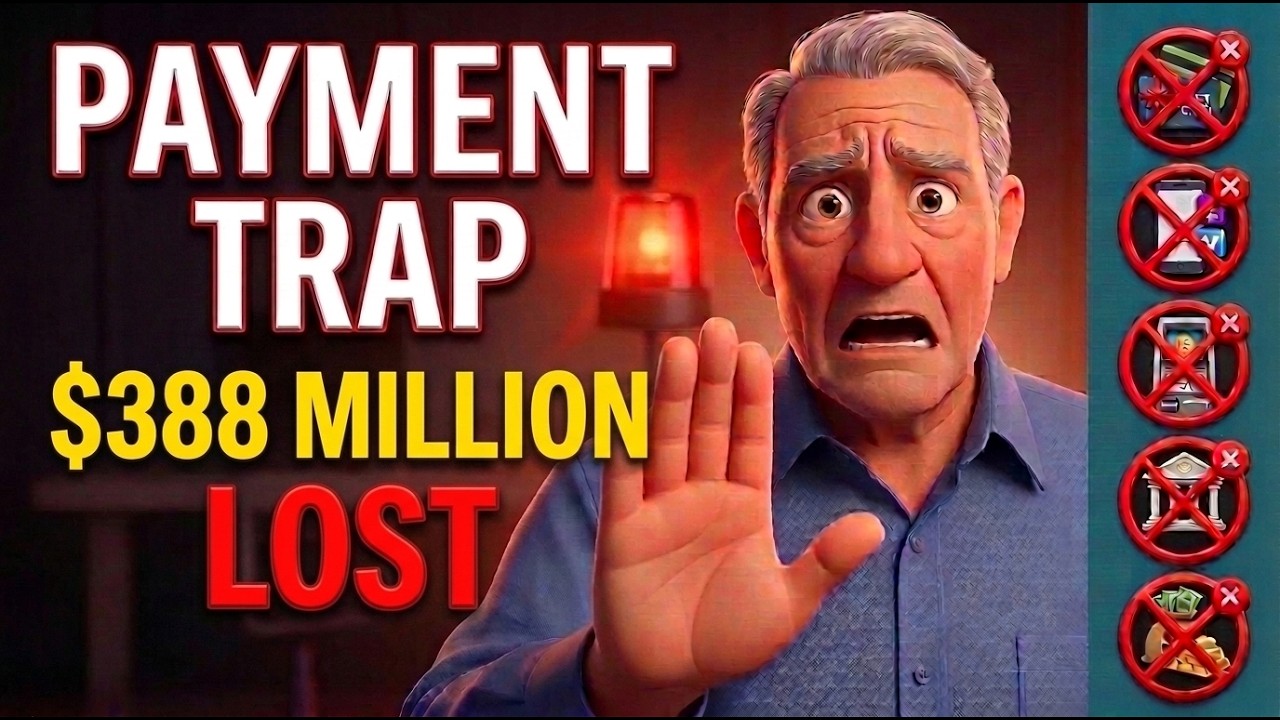
4. The money has to move in a way you cannot take back. Gift cards. A wire. Cash to a courier. Cryptocurrency. Legitimate institutions do not ask for any of these. Ever.
5. A familiar face is selling you something. If a celebrity appears in a video recommending an investment, assume it was fabricated until you prove otherwise.
The test that still works
Ask a question the machine cannot know.
Not your birthday — anyone can find that. Ask what you called the dog. Ask what he ate at Thanksgiving. Ask what his grandfather used to say when he lost at cards. A cloned voice knows the words your grandson has said in public. It does not know your family's private life.
And on a live video call, there is one more, and it is the most useful thing on this page: ask them to turn their head all the way to the side, or to slowly wave a hand in front of their face. The technology still struggles with a full profile and with anything crossing the face. A real person does it without thinking. A deepfake tears, smears, or freezes.
Then do the one thing that costs nothing and beats all of it. Sit down with your family this week and pick a code word. A phrase no machine could find online and no stranger could guess. Not a birthday. Not the pet whose photos you've posted. Something only your people would know — and keep it off the internet.
If this is happening to you right now
Stop sending money. Call your bank first — speed matters more than anything else in the first hours. Then report it:
- FBI Internet Crime Complaint Center — ic3.gov
- Federal Trade Commission — reportfraud.ftc.gov
- National Elder Fraud Hotline — 1-833-FRAUD-11 (1-833-372-8311), Monday–Friday, 10am–6pm ET
- AARP Fraud Watch Helpline — 877-908-3360. It is free, and a real person will talk you through it.
And please hear this. If a machine wearing your grandson's voice fooled you, that is not a failure of judgment. It is a technology built to defeat judgment.
It took twenty-five million dollars from a finance professional who was looking right at his own CFO.
Sources: FBI Internet Crime Complaint Center, 2025 Elder Fraud Report (released April 2026); FBI public service announcement on AI voice cloning (June 2026); Federal Trade Commission Consumer Sentinel Data Book 2025 (released June 2026). The $25 million deepfake video-call case was widely reported and confirmed by Hong Kong police.