Your 2027 Social Security Raise Is Automatic. Anyone Who Says Otherwise Is After Your Check.
Social Security announced a 3.6% raise for 2027. Scammers use that news as bait to redirect your whole monthly payment. Here is how the trap works and how to make your check much harder to steal.
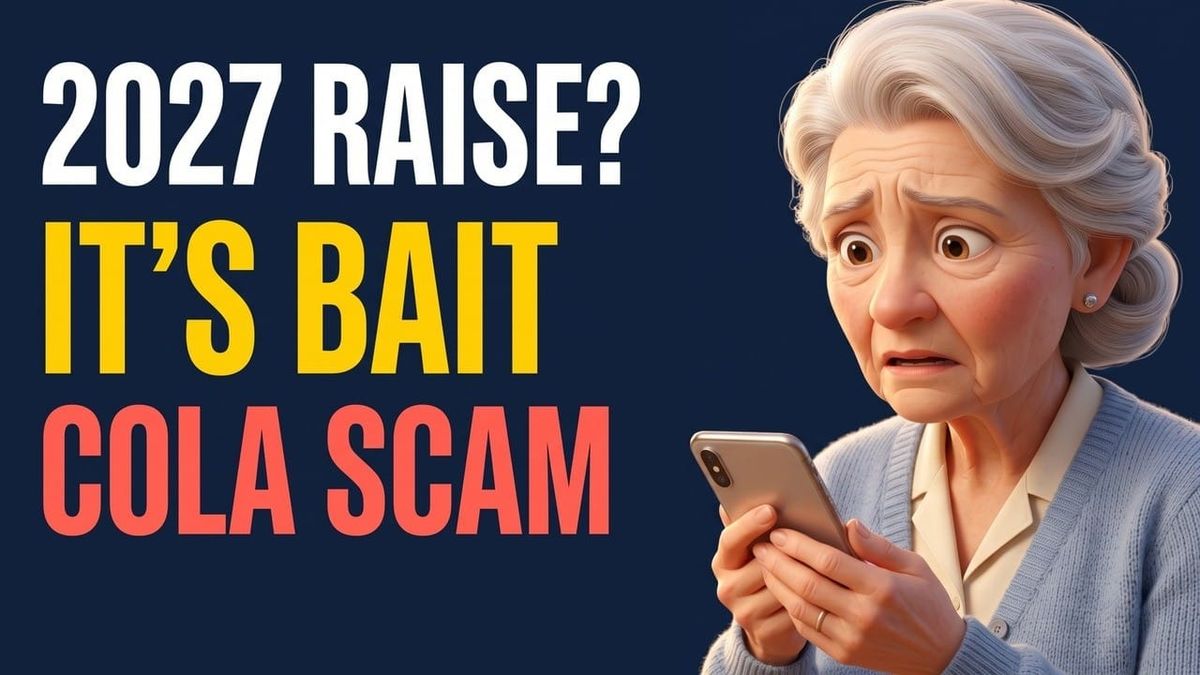
For 20 years, her Social Security check arrived on the second Wednesday of every month. She was 88. It was her only income, and it paid for her room at the long-term care center where she had moved after a stroke.
Then, one January, the deposit did not come.
Her family logged in to her online Social Security account. They found something that did not belong there: the last four digits of a bank account that was not hers, at a bank she had never used.
"Someone had gotten in," her daughter said.
Her entire monthly benefit, $2,452, had gone to a stranger. When the family finally reached a Social Security office, the representative told them, almost casually, that this happens all the time.
The raise is real. The "activate your raise" message is not.
On October 14, 2026, Social Security announced a 3.6% cost-of-living adjustment (COLA) for 2027. It covers nearly 72 million people who get Social Security benefits and about 7.3 million people who get Supplemental Security Income (SSI).
- The higher Social Security payment starts in January 2027. For SSI, it starts on December 31, 2026.
- Your notice with the new amount comes from Social Security. It appears in your online account in late November (if you sign up for online notices by November 18) and arrives by mail in December.
You do not have to do anything to get it. There is nothing to activate, apply for or confirm.
Every year, right behind the announcement, come messages that promise to help you collect your raise. Federal investigators and AARP have both warned about them. What they are really after is the whole check.
How the trap works
1. The bait. A letter, a text, an email or a phone call says you must act to receive your raise. Confirm your details, call this number, or pay a fee. AARP has described people being asked to pay $100 to "activate" their increase. It may look official.
2. The questions. They ask for your full name, your date of birth and your Social Security number. Sometimes they even ask for your parents' names. It sounds like routine paperwork.
3. The switch. Social Security's Inspector General has described exactly this: a caller offered a cost-of-living increase and collected the details. Then the thief contacted Social Security, posing as the victim, and changed the direct deposit, the address and the phone number. The next payment went to the thief.
How often it happens
Social Security's Office of the Inspector General studied just three months, October to December 2023. It found that about 1,200 people had their payments misdirected after someone used Social Security's phone line to change their direct deposit without permission. About $2.2 million was involved, and as of April 2025 about $2 million of it had not been recovered.
Social Security tightened its identity checks for phone changes in April 2025. That helps. It does not mean the risk is gone.
Three facts to keep by the phone
- Your raise is automatic. There is nothing to activate, apply for or confirm.
- Your new amount comes in a notice from Social Security: online in late November, by mail in December.
- Social Security says its employees will never promise a benefit in exchange for personal information or money.
How to make your check much harder to steal
Set up your own online account. Go to ssa.gov/myaccount and type the address in yourself. Do not click a link in a message, and do not search for it. Social Security says having your own account takes away the risk of someone else creating one in your name. It is not a guarantee. So after each payment, sign in and check that the bank account listed is still yours.
Add the Direct Deposit Fraud Prevention block. If you already receive benefits, you can add it inside your account. It stops anyone, including you, from enrolling in direct deposit or changing your direct deposit or address online or through a bank. To change those details later, or to remove the block, you contact Social Security yourself.
The block may not stop someone who contacts Social Security directly and pretends to be you. That is why you keep checking.
If you already gave out your details, do not wait for a missing payment. Contact Social Security that same day. Then add the block and check your account.
What happened to her money
She did get it back, about six weeks after her family discovered the problem. Social Security does not accept powers of attorney, so her son became her representative payee: the person Social Security appoints to manage benefits for someone who needs help.
If you help a parent with their money
Sit down together. Set up the account, add the block, and agree that any message about "the raise" gets checked with you first. Put the three facts above somewhere you both can see them.
If it has already happened
Contact Social Security directly. Use the number below, never one from a call, a letter or a text. Then report it.
- Social Security: 1-800-772-1213, or sign in at ssa.gov/myaccount (type it in yourself)
- Social Security Office of the Inspector General: oig.ssa.gov/report
- Federal Trade Commission: ReportFraud.ftc.gov
- National Elder Fraud Hotline (for anyone 60 or older): 1-833-372-8311 (1-833-FRAUD-11), Monday to Friday, 10 a.m. to 6 p.m. Eastern
If it happened to you, it is not a mark against you. These are organized criminals, and they time their messages to the news.
The rule worth keeping
Your raise is automatic. Anyone who asks you to activate it, confirm it or pay for it is a scammer.
Sources: Social Security Administration, press release of October 14, 2026 (3.6% COLA for 2027; notice timing). SSA Office of the Inspector General, news release of September 9, 2025 (misdirected payments, October to December 2023) and fraud advisory of July 19, 2017 (cost-of-living offers). SSA Fraud Prevention and Reporting page and SSA blog of August 21, 2024 (Direct Deposit Fraud Prevention block). SSA Publication 05-10220 (online account). SSA guidance on COLA notices. AARP warning on COLA "activation" fees. The woman's case was reported by a major U.S. newspaper in 2024; names are left out here. Checked October 2026. This article is educational and is not legal or financial advice.