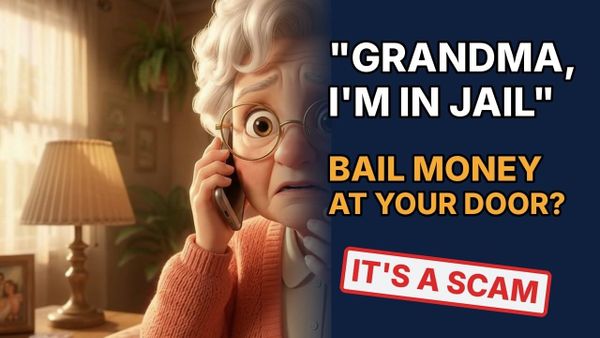
"This Is Your Bank's Fraud Department": The Call That Cost an 80-Year-Old More Than $43,000, and the One Rule That Stops It
A caller from "your bank" says there is fraud on your account. The call itself is the fraud. Here is how the trap works, four facts to keep by the phone, and exactly what to do.
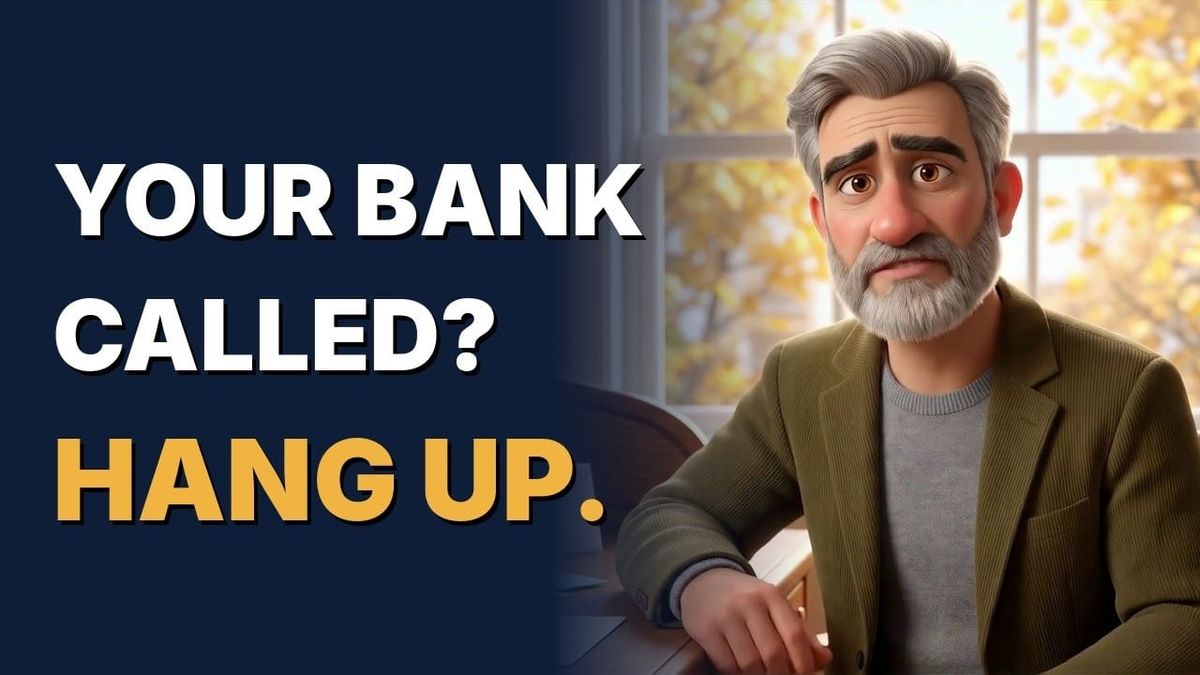
The phone rang at an 80-year-old woman's home. The caller said he worked for her bank. He said he was looking into fraud on her account, and that he was there to help.
The call tricked her into giving up her bank cards. A rideshare driver, sent by the scammers, came to her house to collect them. Her cards were then used for withdrawals and purchases totaling more than $43,000. $22,000 of it was spent at electronics stores.
The caller was never her bank. The call itself was the fraud.
It is not a rare story
In October 2026, the Federal Trade Commission sent its yearly report on older consumers to Congress. Of all the scammers who pose as a company, the ones posing as a bank cost older adults the most in reported losses.
And the FTC says most fraud is never reported to the government at all, so the real losses are likely far larger than what gets reported.
How the trap works
The trap is built in three steps.
Step one: the alarm. A text asks whether you just made a large purchase, and if you answer, a "fraud specialist" calls. Or the call comes first, warning that someone is draining your account. The caller ID may even show your bank's real name.
Step two: the proof. The caller already knows your name. He may know part of your card number too. While you talk, he is trying to get into your account, so your real bank sends a security code to your phone. He asks you to read it to him "to prove you are you." The code is real. The caller is not. That code is the key to your account. Reading it aloud hands it over.
Step three: the rescue. You are told to move your money to a new account to keep it safe. Or you are told to hand your card to someone the bank is sending. And you are told to keep it quiet.
Four facts to keep by the phone
- Your bank will never call you and ask for a code it just sent you.
- Your bank will never call and tell you to move your money to protect it.
- A real bank will never send a courier to pick up your card. Police in Gilbert, Arizona, and in Boston have issued this warning.
- The name on your caller ID proves nothing. It can be faked.
If the call or text comes
- Hang up. If it was a text, do not reply, do not tap the link, and do not call any number in it.
- If someone is on the way to your home to pick up your card, call 911 first.
- Never give your card, your PIN or a code to anyone who calls, texts or comes to your door.
- Call your bank yourself, at the number on the back of your card or on your statement. Use a different phone if you can. On a landline, wait a few minutes first, because a scammer can keep the line open after you hang up. If something really is wrong, your real bank can tell you on that call.
If you already shared a code, handed over a card or moved money
- Call your bank right away, at the number on the back of your card. Use a different phone if you can; on a landline, wait a few minutes after hanging up before you dial. If you no longer have the card, use the number on your statement or on another card from the same bank. They can lock the account to help stop more money from leaving. If you moved or sent money, tell them how and when you sent it. The sooner they know, the better the chance of stopping it.
- Report it to the FBI's Internet Crime Complaint Center at ic3.gov (type the address in yourself).
- Report it to your local police as well.
- If you are 60 or older, or you are helping someone who is, call the National Elder Fraud Hotline at 1-833-372-8311 (weekdays; hours below). It can help you report it and connect you with support. The call is free.
What happened to the man behind it
The man who ran this scheme targeted other older adults too. He admitted running the scheme in a plea agreement in March 2026. In September 2026, a federal judge sentenced him to 57 months in prison, nearly five years.
In messages to someone working with him, he called his victims "vics." He boasted that the targets were endless.
They are not endless when more of us know to hang up and call the number on the back of the card.
If you have a parent 60 or older
Take out their card together. Turn it over and point to the number on the back. Tell them this number, or the one on their statement, is the one to call when anyone contacts them about their account.
And tell them that calling you is never a bother.
Where to get help
- Your bank: the number on the back of your card or on your statement (never a number from a text or a caller)
- FBI Internet Crime Complaint Center: ic3.gov (type the address in yourself)
- National Elder Fraud Hotline (for anyone 60 or older, or someone helping them): 1-833-372-8311 (1-833-FRAUD-11), Monday to Friday, 10 a.m. to 6 p.m. Eastern (7 a.m. to 3 p.m. Pacific)
- Your local police: the non-emergency line, or 911 if someone is coming to your door
If this has happened to you or someone you love, you are not alone, and it is not your fault. These are professional criminals.
The rule worth keeping
Any call or text about fraud on your account gets one answer, even if it seems to come from your bank. Hang up, or ignore the text. Call the number on the back of your card or on your statement. The code stays on your phone. The card stays in your wallet.
Sources: U.S. Attorney's Office, Southern District of California, sentencing announcement, September 21, 2026, and plea announcement, March 2026 (the 80-year-old's case, amounts, sentence and the defendant's messages). Federal Trade Commission, "Protecting Older Consumers 2025–2026," report to Congress, October 19, 2026. FTC consumer advice on bank fraud calls and verification codes. Federal Communications Commission, caller ID spoofing. U.S. Department of Justice, Office for Victims of Crime (National Elder Fraud Hotline). Courier warnings from police in Gilbert, Arizona (July 2026, as reported by local news) and Boston (January 2026). Names of victims and the defendant are left out here. Checked October 2026. This article is educational and is not legal or financial advice.