"This Is Your Bank's Fraud Department": The Impersonation Scam Draining Seniors' Life Savings
The call comes from your bank's fraud department. They are calm, official, and they are trying to help you move your money somewhere safe. None of it is real.
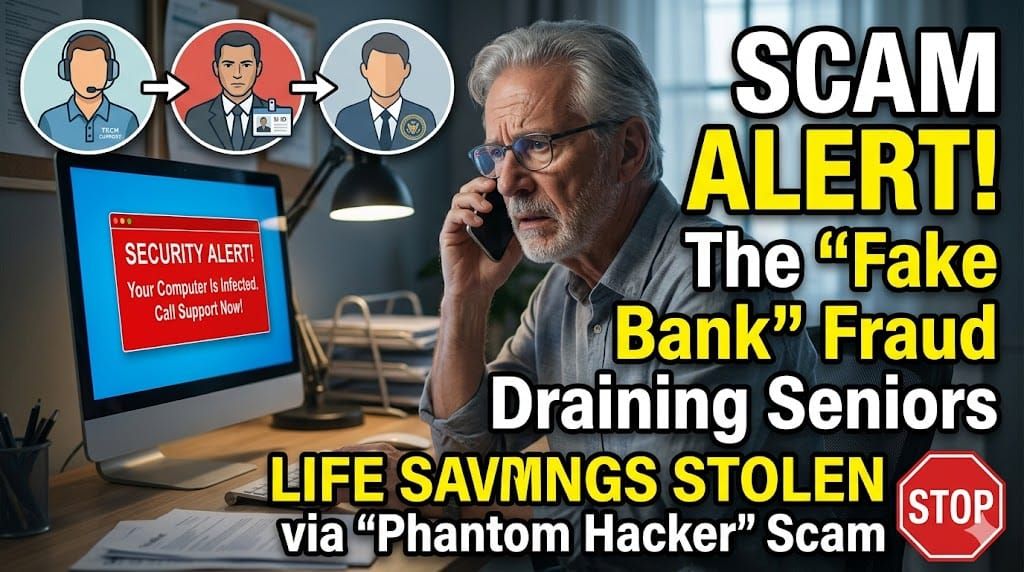
It starts with a pop-up. A man we'll call Walter — 71, a retired machinist whose story is a composite of cases the FBI sees every single day — is reading the news on his computer when the screen freezes. A red warning fills the display: "SECURITY ALERT. Your computer has been infected. Do not shut down. Call Microsoft Support immediately." A phone number blinks below it.
Walter calls. A calm, professional-sounding man answers, tells him his computer has been compromised by hackers, and asks him to install a small program so the "technician" can fix it remotely. Once that program is running, the stranger can see everything on Walter's screen.
While "fixing" the computer, the technician notices something alarming. "Sir, I'm seeing unauthorized access to your bank account. For your protection, I'm going to connect you with the fraud department at your bank." A new person comes on the line. She knows Walter's bank's name. She's calm, sympathetic, and deeply concerned: a foreign hacker has gained access to his accounts, and his money is in immediate danger. The only way to protect it, she explains, is to move it — right now — into a "secure" government-protected account while the breach is contained.
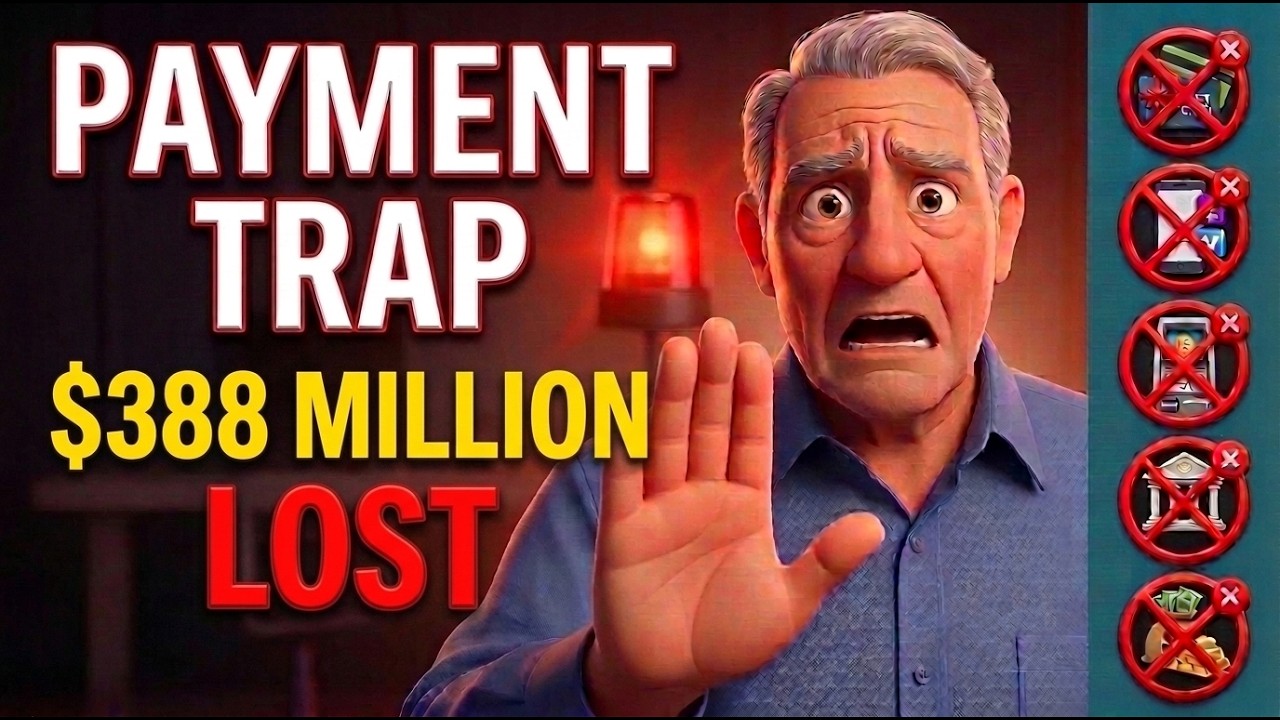
A third man calls the next day. He says he's with the federal government. He thanks Walter for cooperating and confirms the instructions: wire the money, buy gold, or send it through a cryptocurrency machine, in several transfers over the coming days, and tell no one — because the investigation is confidential and talking could tip off the hacker.
Over three weeks, Walter moves nearly everything he has. There was no hacker. There was no fraud department. There was no government investigation. The only crime committed was the one being done to Walter — and by the time he realized it, his retirement was gone.
How the scam works: one lie wearing three uniforms
What happened to Walter has a name. The FBI calls it the "Phantom Hacker" scam, and it's a particularly cruel form of impersonation fraud because it uses your own sense of caution against you. The criminals don't ask you to be careless. They convince you that moving your money is the careful thing to do.
It unfolds in three phases, each with a different impersonator:
- The tech-support impostor makes first contact — through a pop-up, a phone call, a text, or an email — and convinces you your device is compromised. The goal is to get remote access to your computer and a look at your financial accounts.
- The "financial institution" impostor then calls, posing as your bank or brokerage, and warns that a hacker is draining your accounts. They instruct you to move your money to a "safe" account, usually by wire transfer, cash, gold, or cryptocurrency.
- The "government" impostor may follow, claiming to be from the Federal Reserve, the FTC, or another agency, "confirming" the instructions and adding the weight of official authority.
Each handoff makes the lie feel more legitimate. And the request to stay silent — "don't tell anyone, it could compromise the investigation" — exists for one reason: to keep you from saying the sentence out loud to a family member who would immediately recognize it as a scam.
This is not a rare story
In 2024, impersonation scams were the single largest category of fraud reported to the Federal Trade Commission — more than 845,000 reports and roughly $2.95 billion in losses. Adults 60 and older reported losing about $700 million to imposter scams in that year alone, and the cases involving the largest losses — people who lost $100,000 or more — have exploded, reaching $445 million in 2024.
The Phantom Hacker scam specifically has cost Americans more than a billion dollars. In its 2023 public warning, the FBI reported that roughly half of the victims were over 60, and that older adults accounted for about two-thirds of the total losses. These are not careless people. They are cautious people who were manipulated by professionals.
And it is being prosecuted. In one case brought by the San Diego Elder Justice Task Force, a man was sentenced to prison for his role in a scheme in which conspirators posed as tech-support specialists, bank representatives, and government officials. According to the Department of Justice, one victim received a virus pop-up on his computer, called the number, was passed from a fake "tech-support" agent to a fake "bank" representative who claimed there were unauthorized transfers — and was told to immediately withdraw all of his money. He withdrew $28,000. The pattern is always the same, because it works.
Red flags: how to recognize an impersonation scam
No matter who the caller claims to be, these warning signs mean you are almost certainly being scammed:
- An unexpected pop-up, call, text, or email says your computer is infected or your account has been hacked, and gives you a number to call. Real security warnings never give you a phone number to dial.
- Someone asks for remote access to your computer. No legitimate tech company, bank, or agency will ask to take control of your device after an unsolicited contact.
- You're told your money is in danger and must be moved to a "safe," "secure," "alias," or "government" account. This is the single biggest tell. Your bank will never ask you to move money to "protect" it. Money in your own insured account is already safe.
- The payment method is unusual: wire transfer, cash, gold or precious metals, or a cryptocurrency machine. Legitimate institutions do not move your money this way.
- You're sworn to secrecy — told not to discuss it with family, or even with bank tellers, because it's a "confidential investigation."
- You're pressured to act immediately, and the urgency never lets up. Scammers manufacture panic because panic stops you from thinking clearly or making one verifying phone call.
- The caller already knows details about you — your name, your bank, part of an account number. Knowing your information does not make someone legitimate; that data is often bought or stolen.
If a request checks even one of these boxes, stop. Hang up. You are allowed to end any call, no matter how official it sounds.
What to do if you've already fallen victim
If this has happened to you or someone you love, please hear this first: it is not your fault. These are organized, professional criminals who rehearse this deception for a living, and they specifically target good, careful, trusting people. Shame is the scammer's last weapon — don't let it stop you from acting. Move quickly:
- Stop all contact and send no more money. The moment you suspect a scam, cut off the caller. Do not make "one last" transfer to "release" your funds — that's part of the script.
- Disconnect the computer they had access to from the internet, and have it checked for the remote-access software they installed. Don't use it for banking until it's been cleaned.
- Call your real bank immediately — using the phone number printed on the back of your card or your statement, not any number the scammer gave you. Ask them to flag the transfers; fast action sometimes allows a wire to be recalled.
- Change your passwords for banking, email, and any account the scammer may have seen, from a different, trusted device.
- Report it. File with the FBI's Internet Crime Complaint Center at IC3.gov, the FTC at ReportFraud.ftc.gov, and your local police. If money moved, reporting fast and in detail gives investigators their best chance.
- Protect your identity. Consider placing a free fraud alert or credit freeze with the three credit bureaus (Equifax, Experian, and TransUnion) so new accounts can't be opened in your name.
- Tell someone you trust. A family member or friend can help you take these steps, watch for follow-up scams, and remind you that you are not alone. (Beware "recovery" scammers who promise to get your money back for a fee — that's a second scam targeting the same victims.)
The one thing to remember
A real bank, a real tech company, and a real government agency will never call you out of the blue, tell you your money is in danger, and ask you to move it to keep it safe. That request — no matter how official, urgent, or frightening the voice on the line — is the scam itself.
When in doubt, hang up and call your bank back on the number printed on your card. That one pause is what the criminals are most afraid of, and it's what protects everything you've worked your whole life to build.