"We Spotted a Hole in Your Roof": The Contractor Scam That Took $435,000 From an 80-Year-Old, and the One Rule That Stops It
Two men said they had spotted a hole in his roof. There was never a hole. Here is how the traveling repair-crew trap works, and the one rule that stops it.
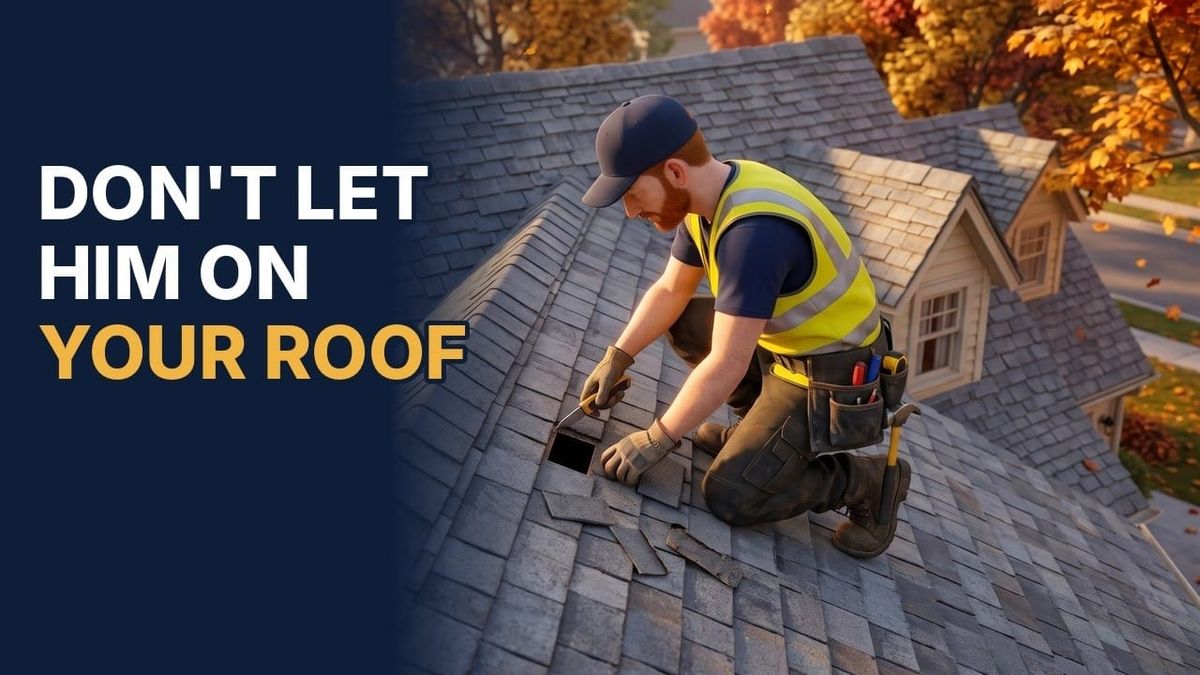
An 80-year-old man lived alone just north of Seattle. One day two men knocked on his door. They said they were working on a house nearby and had spotted a hole in his roof. One of them held up a broken shingle as proof.
The men offered to fix it. He wrote a check for $15,000. Then another, and another. Next they said his foundation was cracking. They dug a trench around the house and poured some concrete. It looked like real work. He kept asking for invoices and records. They never came.
Then he wired $200,000 for "building supplies." In all, he handed over $435,000, a huge share of his life savings.
There was never a hole in his roof. His foundation was never failing.
He is not the only one
Crews like this travel from city to city. Federal prosecutors call them "traveling con men." Police in California, Washington and Michigan have all warned about home repair scams like this one, and these crews often target older homeowners.
How the trap works
The trap is built in three steps.
Step one: the knock. A friendly man is at your door. He says he is working for one of your neighbors and noticed a problem with your roof or your chimney. He may wear a bright safety vest and drive a white pickup truck. He may use a business name that sounds like a real company. He offers a small repair at a low price, and he can start today. He may say he has materials left over from another job.
Step two: the damage. Once he is up on your roof, you cannot see what he does. Police in Berkeley, California, say some crews break things on purpose. Some even cut holes in the roof. Others bring their own broken shingle as "proof."
Step three: the bill. Now he says the problem is much worse, urgent and dangerous. The small repair turns into thousands of dollars, and he wants cash or a check today. A new problem often appears after each payment.
Four warning signs
- A stranger who knocks because he is "in the area."
- Anyone you did not hire on your roof.
- A demand for cash, or full payment up front.
- Pressure to decide today.
When a stranger knocks with a repair offer
- Have a simple answer ready. Police in Seattle suggest telling anyone at the door that you never decide without talking to your family. Then say no thank you and close the door.
- Do not let anyone you did not hire climb onto your roof.
- Do not sign or pay for anything that day.
- If he will not leave, or is already on your roof, call 911.
Before any repair
- Find your own contractor. Ask people you trust for names.
- Check the license with your state's contractor licensing board.
- Get three written estimates.
- Get a written contract with the price and the contractor's license number.
- Pay with a credit card when you can. Never pay in cash. Never wire money to a contractor.
- Get a second opinion before any big repair. In Rhode Island, a con man told an 83-year-old homeowner that the foundation was cracked. An independent inspector later found no sign that any foundation work was needed.
If it is already happening, or you already paid
- Is a repair crew still at your house? Call 911 right away. Do not pay them anything more.
- Did you already pay? Call your bank or card company right away, at the number on the back of your card or on your statement. A check or a wire can sometimes be stopped if you move fast. Tell them it was a scam, and how and when you paid.
- Report it to your local police, even if you feel embarrassed. Tell them what the workers and their vehicle looked like. You can also report it online to the FBI at ic3.gov (type the address in yourself).
- Did you sign a contract at your door? A federal rule, the FTC's Cooling-Off Rule, often gives you three business days to cancel in writing.
- Call for free help and support. The AARP Fraud Watch Network Helpline (1-877-908-3360) and the National Elder Fraud Hotline (1-833-372-8311) can talk you through your next steps. Hours are below.
What happened to the man north of Seattle
He called his daughter when the men demanded more money. It was the first time he told her about the checks. She took him to the bank, and then she called the police.
Police and prosecutors got back the $200,000 he had wired. Both men pleaded guilty, and a federal judge sentenced each of them to 18 months in prison. Both men agreed to repay the checks he had written. He doubted he would ever see that money.
If you have an older parent who lives alone
Call them this week. Ask whether anyone has offered to work on the house lately. Ask them to call you before they pay anyone for a repair.
Then help them choose a trusted contractor now, before anyone knocks. Put that name and number on the refrigerator.
Where to get help
- Crew at your house right now: call 911
- AARP Fraud Watch Network Helpline: 1-877-908-3360, Monday to Friday, 8 a.m. to 8 p.m. Eastern. Free, for members and nonmembers alike.
- National Elder Fraud Hotline (for anyone 60 or older, or someone helping them): 1-833-372-8311 (1-833-FRAUD-11), Monday to Friday, 10 a.m. to 6 p.m. Eastern
- Your bank: the number on the back of your card or on your statement, if you already paid
- Your local police: the non-emergency line, to report it
- FBI Internet Crime Complaint Center: ic3.gov (type the address in yourself)
- Check a contractor: your state's contractor licensing board
If this has happened to you or someone you love, you are not alone, and it is not your fault. These are professional criminals.
The rule worth keeping
A stranger at your door never decides what your house needs. You choose who works on your home.
Watch the video: https://youtu.be/XeBesvEeBEo
Sources: U.S. Attorney's Office, Western District of Washington, charging announcement (July 2024) and sentencing announcement (December 2024). U.S. Attorney's Office, District of Rhode Island, sentencing announcement, April 2026. City of Berkeley police home repair scam warning, February 2026. Seattle Police roofing and construction scam warning, November 2025. Michigan police warning, July 2026, and the Washington homeowner's own account, 2025, as reported by local news. Federal Trade Commission, "How To Avoid a Home Improvement Scam" and the Cooling-Off Rule. AARP Fraud Watch Network Helpline. U.S. Department of Justice, Office for Victims of Crime (National Elder Fraud Hotline). Names of the homeowners and the defendants are left out here. Checked October 2026. This article is educational and is not legal or financial advice.